In the highly competitive world of online jewelry retail, your photography is your storefront window. It is the only way customers can interact with your product before making a purchase. When planning a visual strategy, brands often debate between two primary aesthetics: the crisp, distraction-free minimalist style, and the contextual, aspirational lifestyle approach.
But the ultimate question remains: which style actually converts browsers into buyers? Let's break down the psychology, the pros and cons, and the data behind both approaches to see what truly drives jewelry sales.
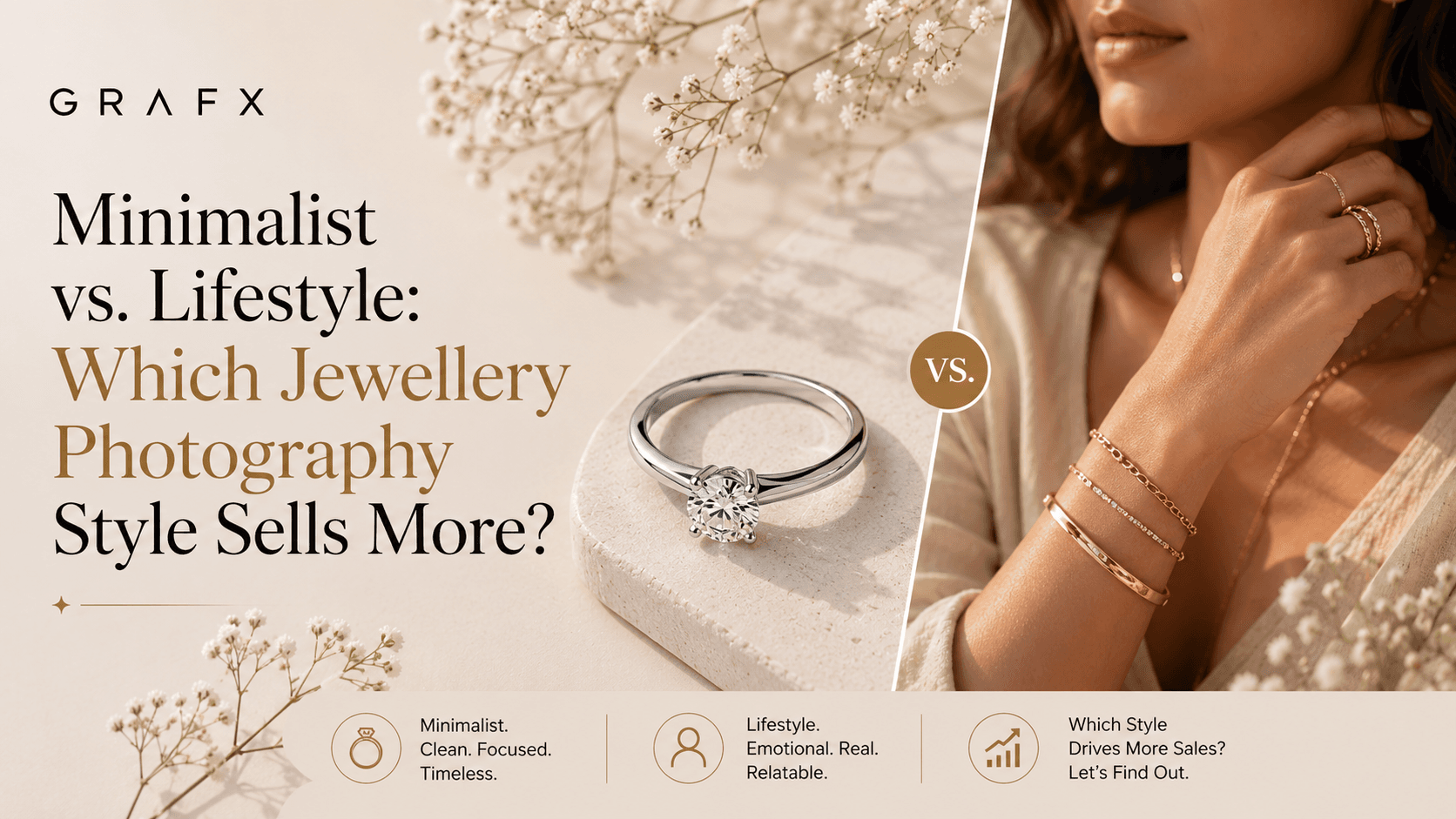
1. Minimalist Photography: The E-Commerce Standard
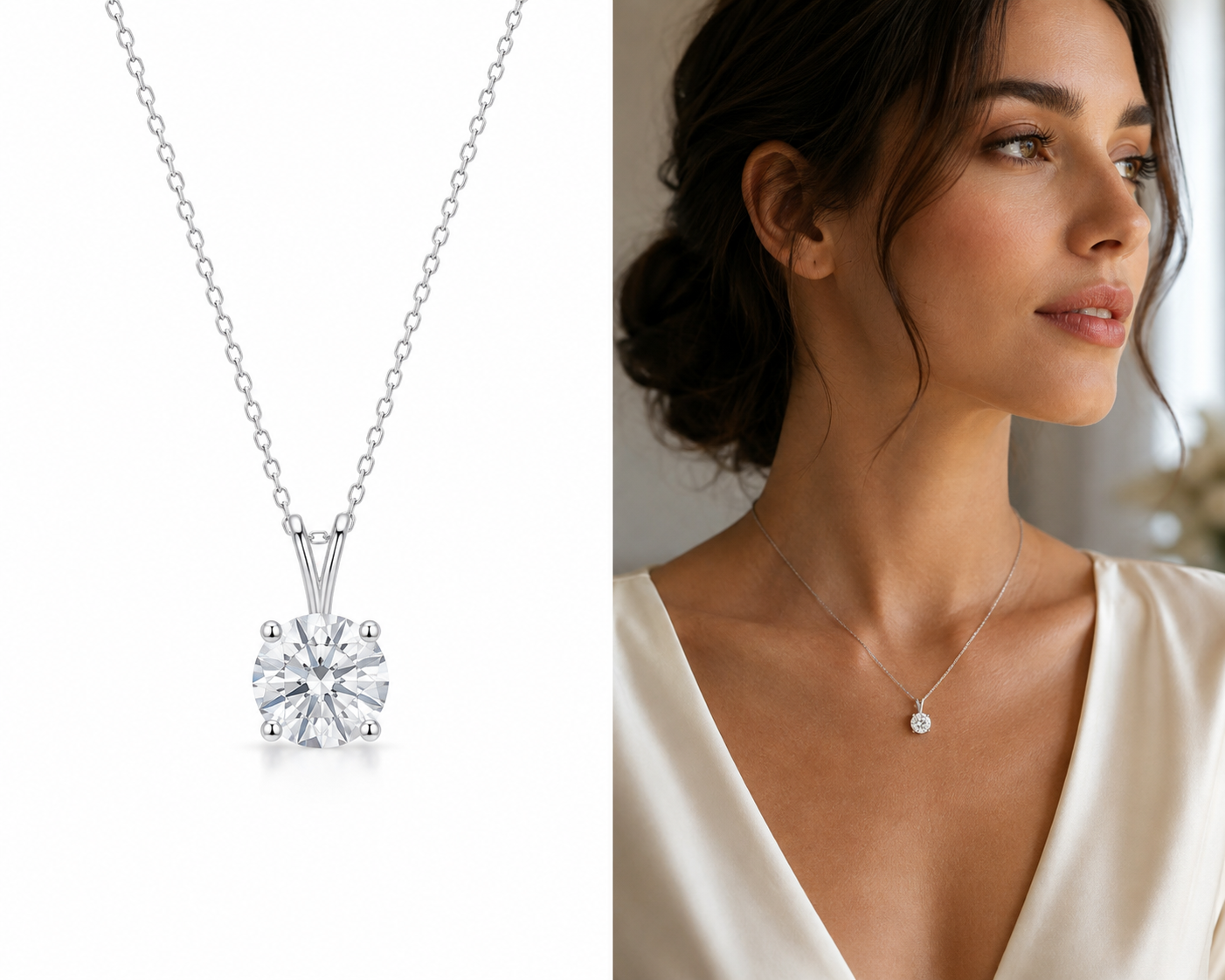
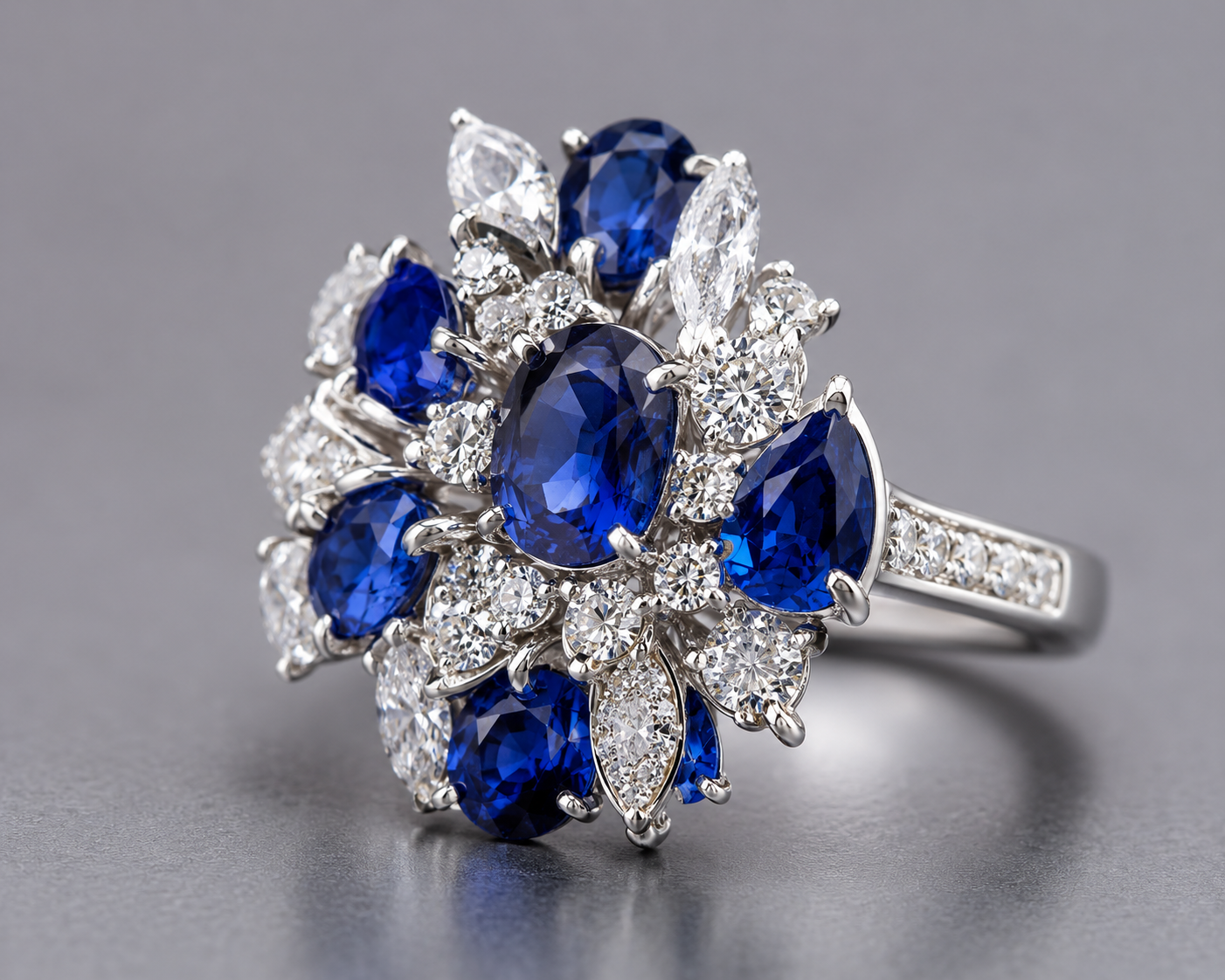
Minimalist jewelry photography focuses entirely on the product. Shot on pure white, soft grey, or solid neutral backgrounds, this style eliminates all distractions. It relies on macro lenses, focus stacking, and flawless lighting to highlight the craftsmanship of the piece.
The Pros:
- Unmatched Detail: It allows the customer to inspect the faceting of a gemstone, the texture of the metal, and the security of the prongs.
- Marketplace Compliance: Platforms like Amazon and Google Shopping mandate pure white backgrounds for their primary listing images.
- Clean Brand Aesthetic: A grid of minimalist photos creates a highly organized, premium-looking catalog.
The Cons:
- Lack of Context: Without a physical reference point, customers cannot easily judge the size or proportion of the jewelry.
- Can Feel Clinical: Pure product shots lack the emotional hook that drives impulse purchases.
2. Lifestyle Photography: Selling the Dream
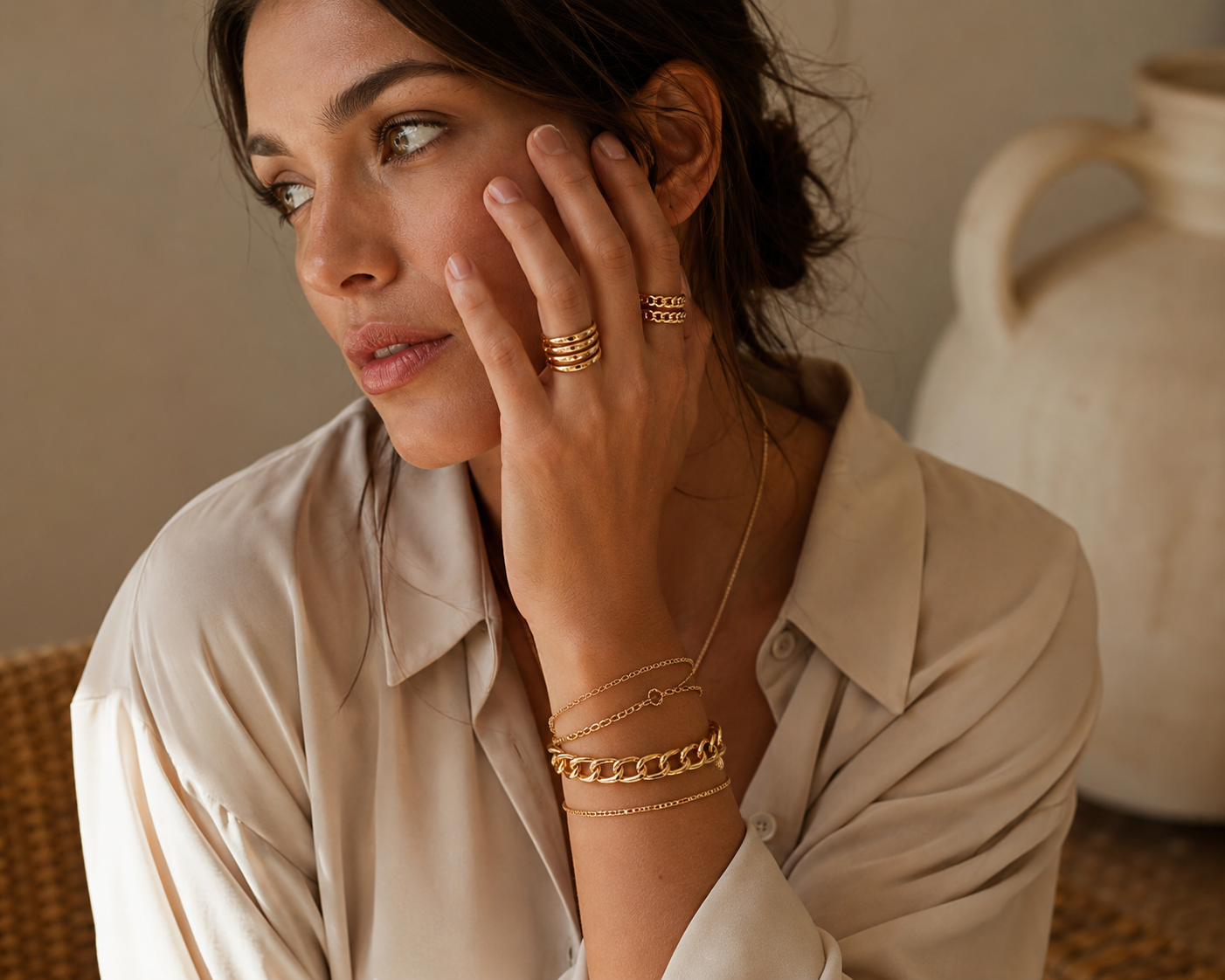
Lifestyle photography shows the jewelry being worn by a model or styled in a real-world environment. Whether it’s an elegant evening gown for a statement necklace or a cozy sweater for everyday rings, this style places the product into a narrative.
The Pros:
- Demonstrates Scale: Seeing a ring on a finger or a pendant on a collarbone immediately communicates the exact size and fit of the piece.
- Emotional Connection: Lifestyle shots sell a "vibe" or an aspiration. Customers aren't just buying a bracelet; they are buying into the lifestyle the image represents.
- Social Media Gold: Instagram, Pinterest, and TikTok audiences engage heavily with human faces and styled aesthetics, making lifestyle shots highly shareable.
The Cons:
- Distracting Elements: Clothing, background scenery, and even the model can draw the eye away from the jewelry itself.
- High Production Costs: Hiring models, stylists, makeup artists, and location scouting makes lifestyle photography significantly more expensive and time-consuming.
3. The Verdict: The Power of the Hybrid Approach
So, which style sells more? The data overwhelmingly points to a hybrid approach. Relying on just one style leaves money on the table.
The most successful jewelry brands use minimalist photography as their primary product image to grab attention with clarity and detail. Then, they use lifestyle images in the secondary image carousel to answer questions about scale, fit, and styling.
By providing both the analytical details (minimalist) and the emotional context (lifestyle), you remove buyer hesitation and drastically increase your conversion rates.
Final Thoughts
You don't have to choose just one lane. Minimalist shots prove the quality of your jewelry, while lifestyle shots help your customers imagine wearing it. By blending both styles on your product pages and marketing channels, you create a comprehensive visual journey that turns interest into guaranteed sales.
Generate Both Minimalist and Lifestyle Visuals Instantly with AI.
Torn between clean product shots and expensive model photoshoots? Why not have both? Grafx is an AI photography platform built specifically for jewelry brands. Generate pristine minimalist macros or stunning lifestyle imagery on AI models in seconds—no studio required.