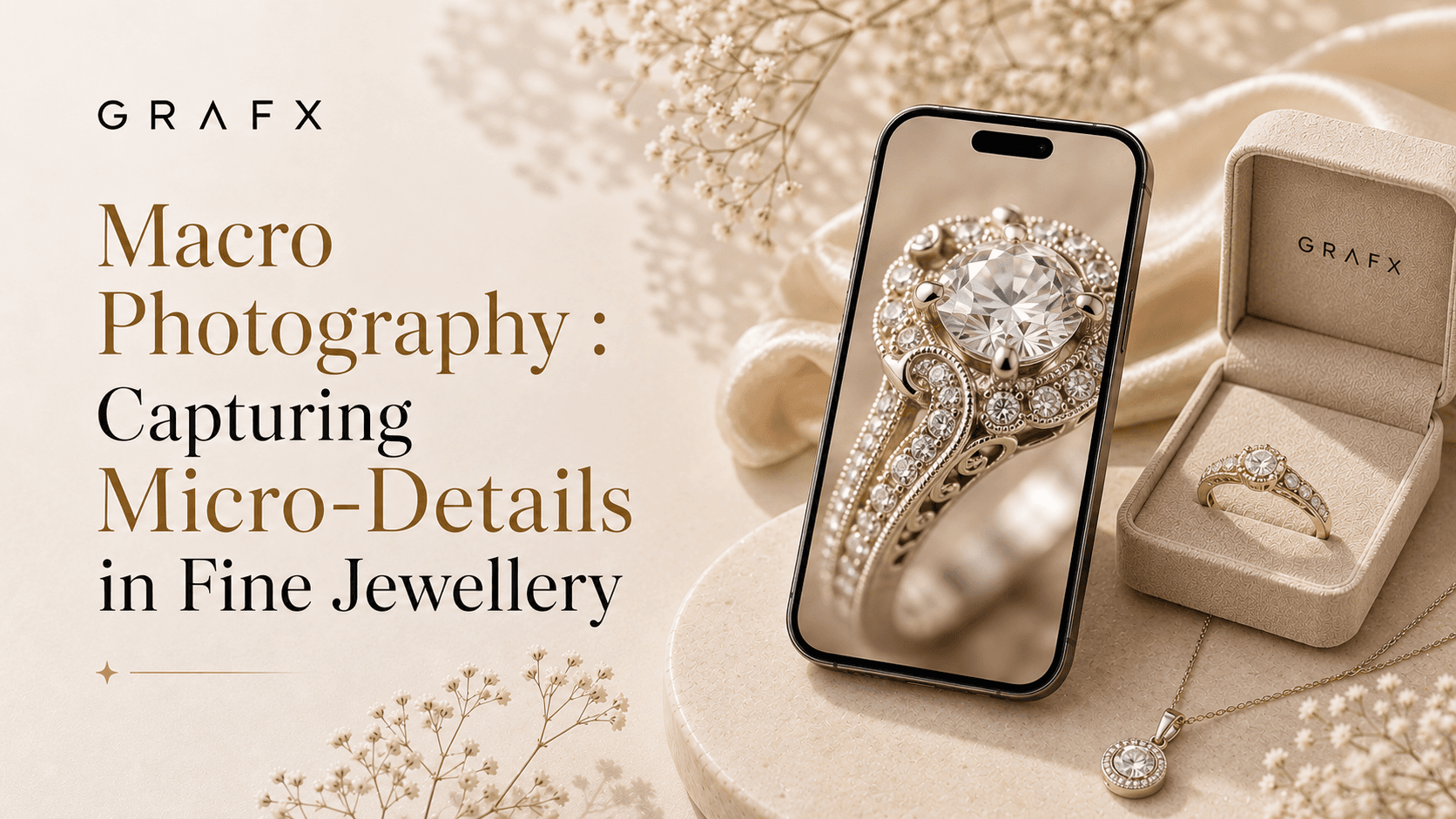
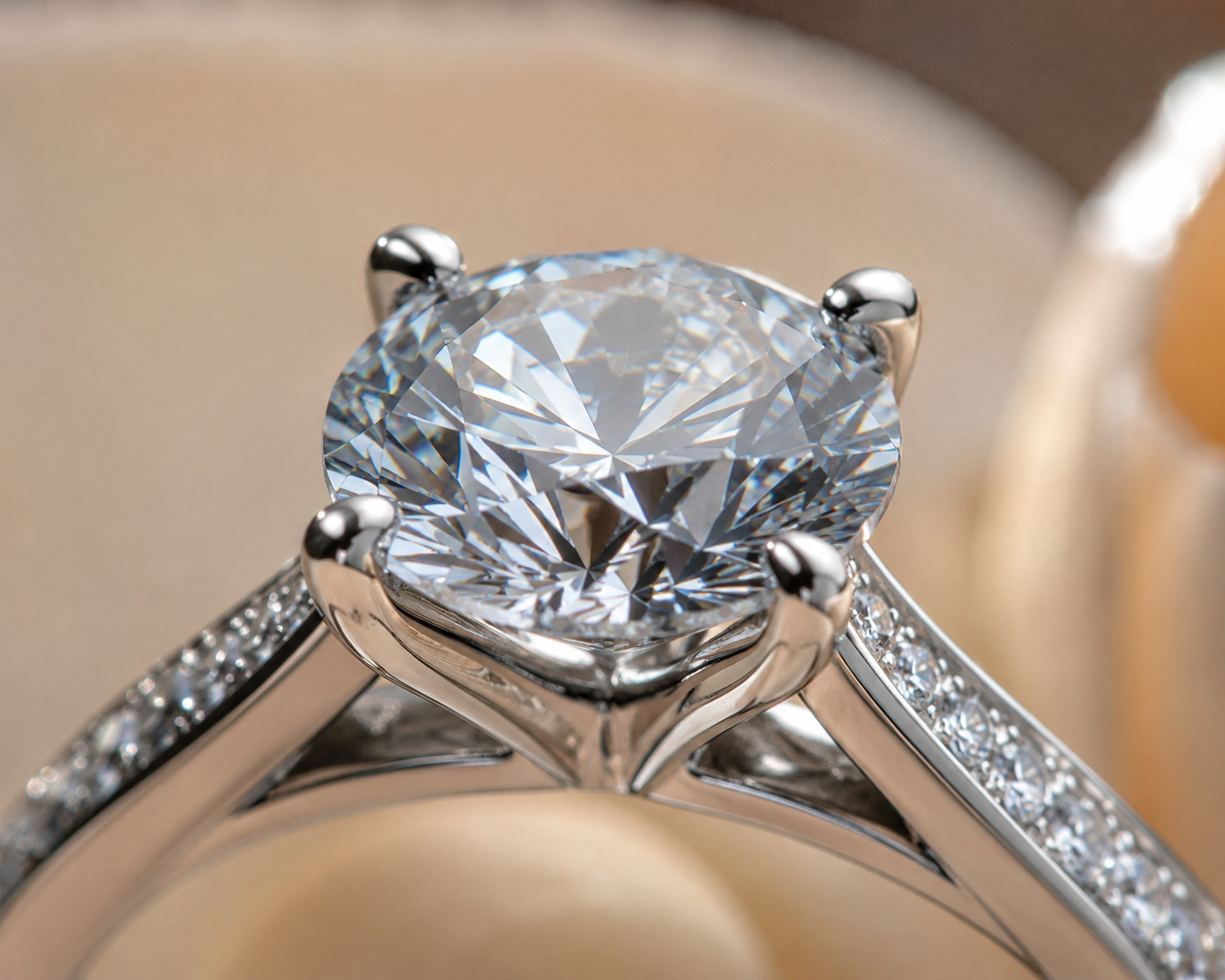
When a customer is shopping for fine jewelry online, they cannot pick up the piece, feel its weight, or inspect the craftsmanship through a jeweler's loupe. Your photography must do that heavy lifting for them. To sell high-ticket items, you need to showcase the microscopic details that justify the price tag: the laser-sharp facets of a diamond, the delicate texture of brushed gold, and the flawless symmetry of a halo setting.
Capturing this level of intimacy requires specialized techniques. Welcome to Macro Photography 101. Here is everything you need to know to shoot breathtaking, ultra-close-up images of your fine jewelry.
1. The Non-Negotiable: A True Macro Lens
You cannot capture true micro-details with a standard kit lens or a smartphone. You need a dedicated macro lens capable of at least a 1:1 magnification ratio. This means the image of the jewelry projected onto your camera's sensor is the exact same size as the jewelry in real life.
- Focal Length: A focal length between 90mm and 105mm is the industry standard for jewelry. This allows you to get incredibly close to the ring or pendant without physically casting a shadow over the piece with your camera body.
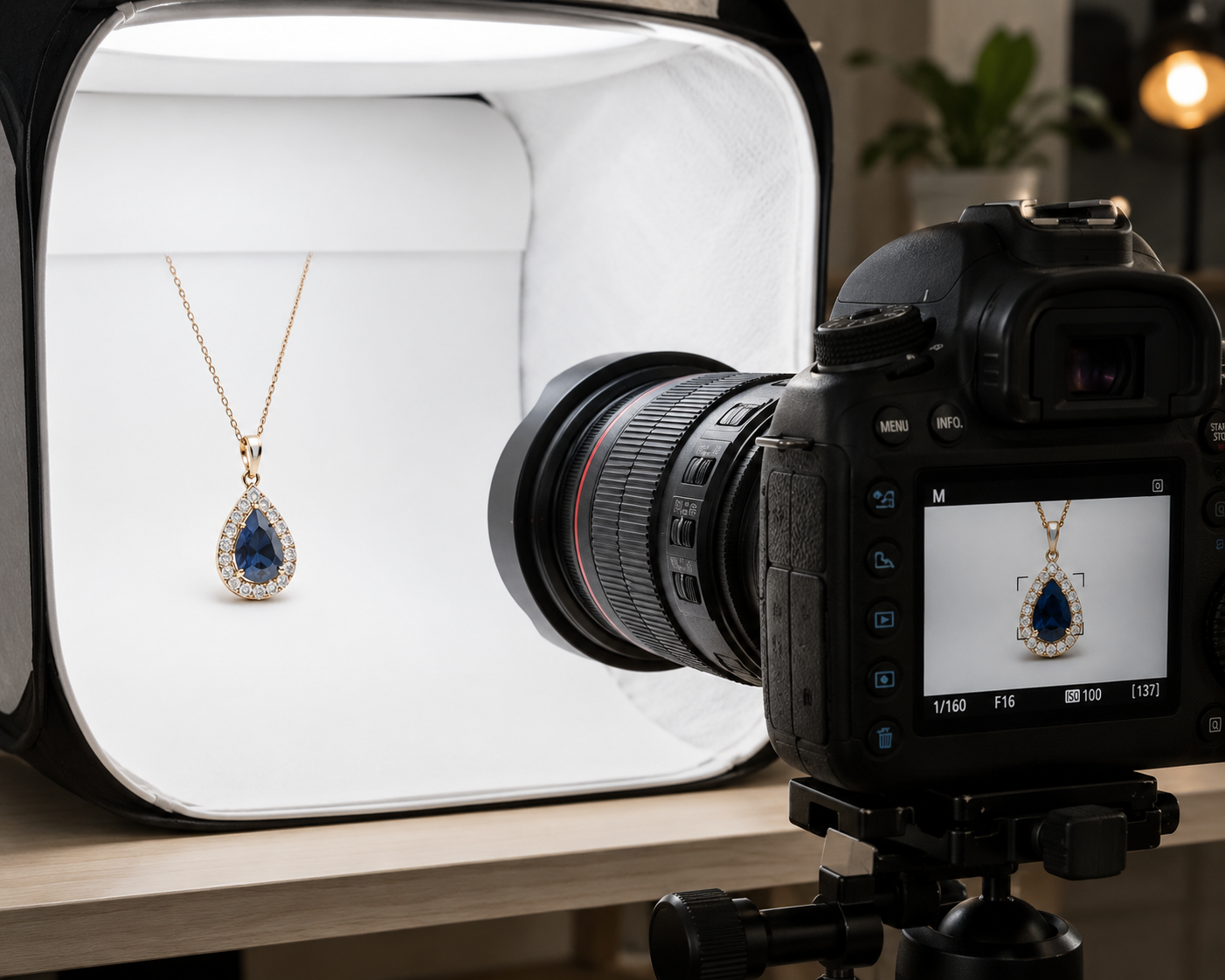
- Sturdy Support: When shooting at 1:1 magnification, even the vibration of your heartbeat can cause motion blur. A heavy-duty, rock-solid tripod is absolutely mandatory.
2. Nailing the Camera Settings
Macro photography completely changes how depth of field (what is in focus) works. Because you are so close to the subject, your focal plane becomes razor-thin.
- Aperture: You need to close down your aperture to increase the depth of field. Shoot between f/8 and f/14. If you go much higher (like f/22), you will encounter "diffraction," a physical property of light that actually makes the image softer and less sharp.
- ISO: Keep this locked at ISO 100. You want the cleanest, most noise-free image possible to preserve the crispness of the metals and stones.
- Shutter Speed: Because you are using a narrow aperture and a low ISO, your shutter speed will be slow. Use a remote shutter release or a 2-second timer so you do not shake the camera when pressing the button.
3. The Professional Secret: Focus Stacking
Even at f/14, you might find that the front prong of a ring is perfectly sharp, but the back edge of the diamond is completely blurred out. How do major brands get the entire ring in razor-sharp focus from front to back?
They use a technique called Focus Stacking. Instead of taking one photo, the photographer takes a series of photos (sometimes 10 to 30 frames). The camera remains completely still, but the focus point is shifted slightly backward in every single shot. In post-production, software like Adobe Photoshop or Helicon Focus blends only the sharpest parts of each image together, creating one final composite photo with an impossible, infinite depth of field.
4. Lighting for the Micro-World
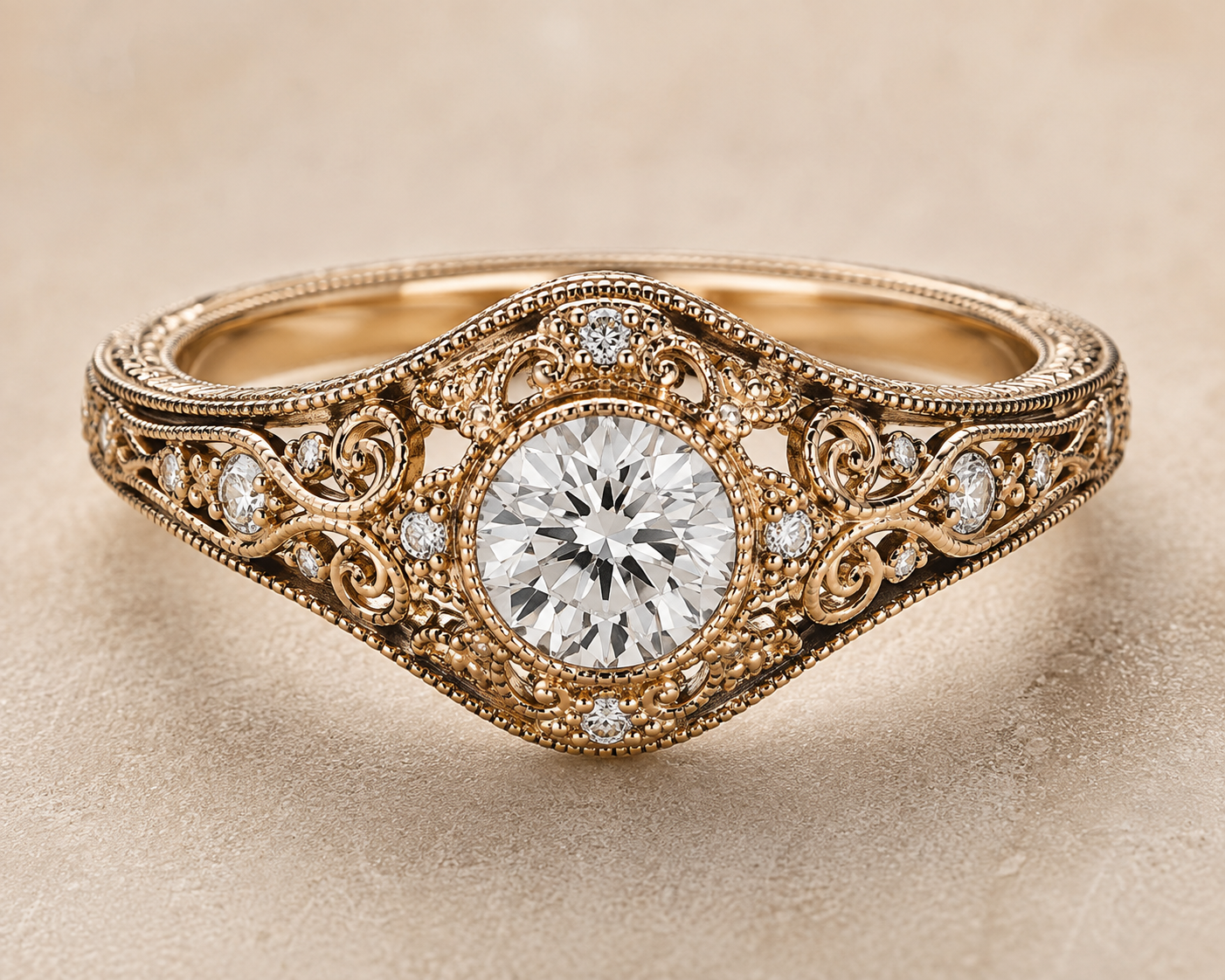
When you get extremely close to a subject, lighting becomes a game of millimeters. Using broad, flat lighting will kill the texture of the piece. To highlight details like milgrain or filigree, you need directional light.
Position a small, diffused LED panel or strobe slightly off to the side to create micro-shadows across the textured surfaces of the metal. These tiny shadows create contrast, which the human eye perceives as sharpness and depth.
Final Thoughts
Macro photography is a slow, meticulous process, but the results are undeniable. By investing in a true macro lens, mastering focus stacking, and shaping your light to reveal texture, you can create imagery that communicates the true luxury and craftsmanship of your fine jewelry.
Capture Micro-Details Instantly with AI.
Struggling with expensive macro lenses, tedious focus stacking, and complex camera settings? Grafx is an AI photography platform built specifically for jewelry brands. Generate hyper-realistic, macro-level imagery with flawless details in seconds—no camera required.