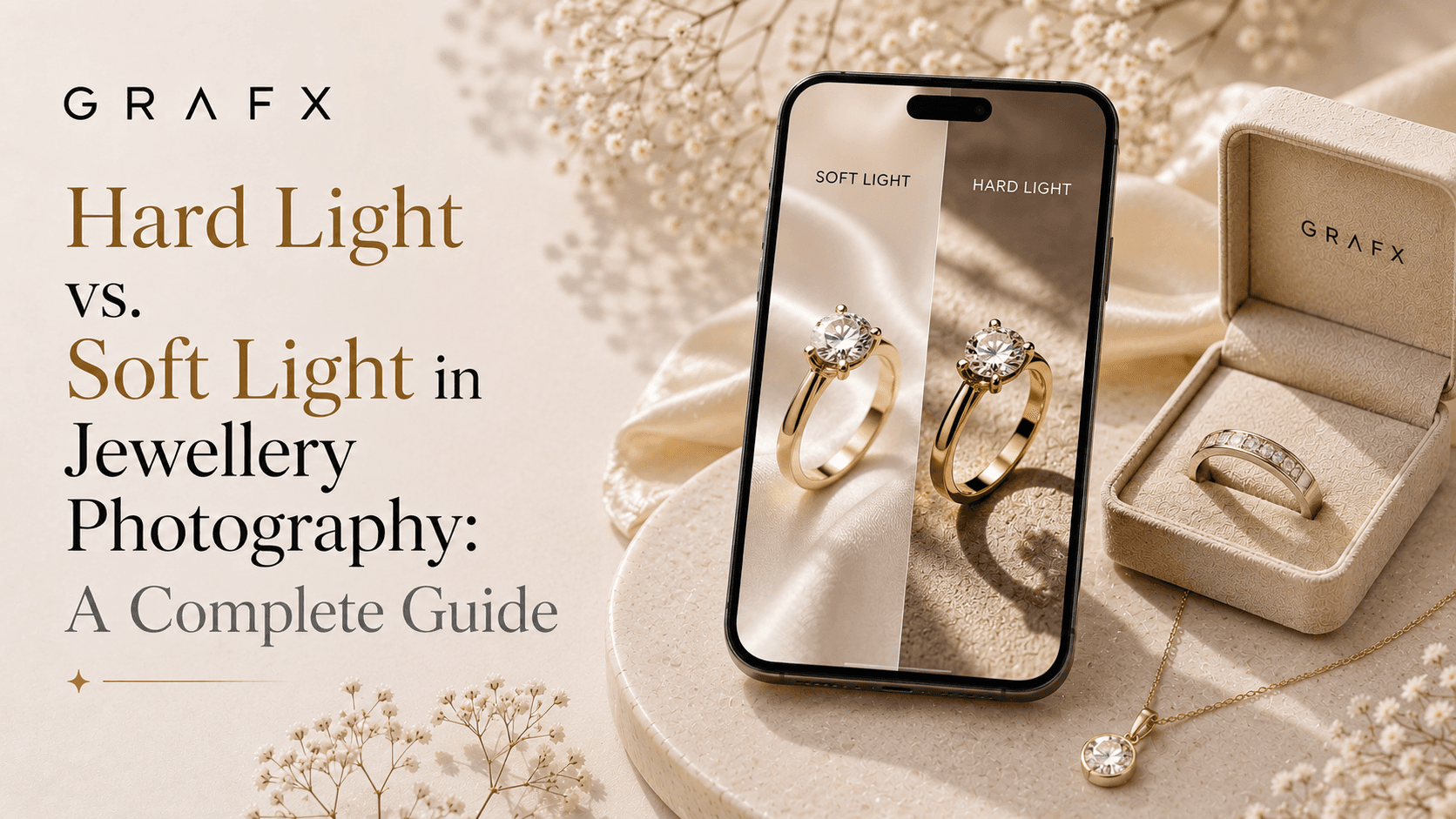
In jewelry photography, light is your paintbrush. The way you illuminate a piece completely transforms its mood, aesthetic, and perceived value. A diamond ring can look soft, romantic, and dreamy in one setup, and sharp, edgy, and dramatic in another—all without changing the camera or the background.
The secret lies in the quality of the light: specifically, whether it is hard or soft. Understanding how these two types of light interact with metals and gemstones is essential for creating compelling visual narratives for your brand.
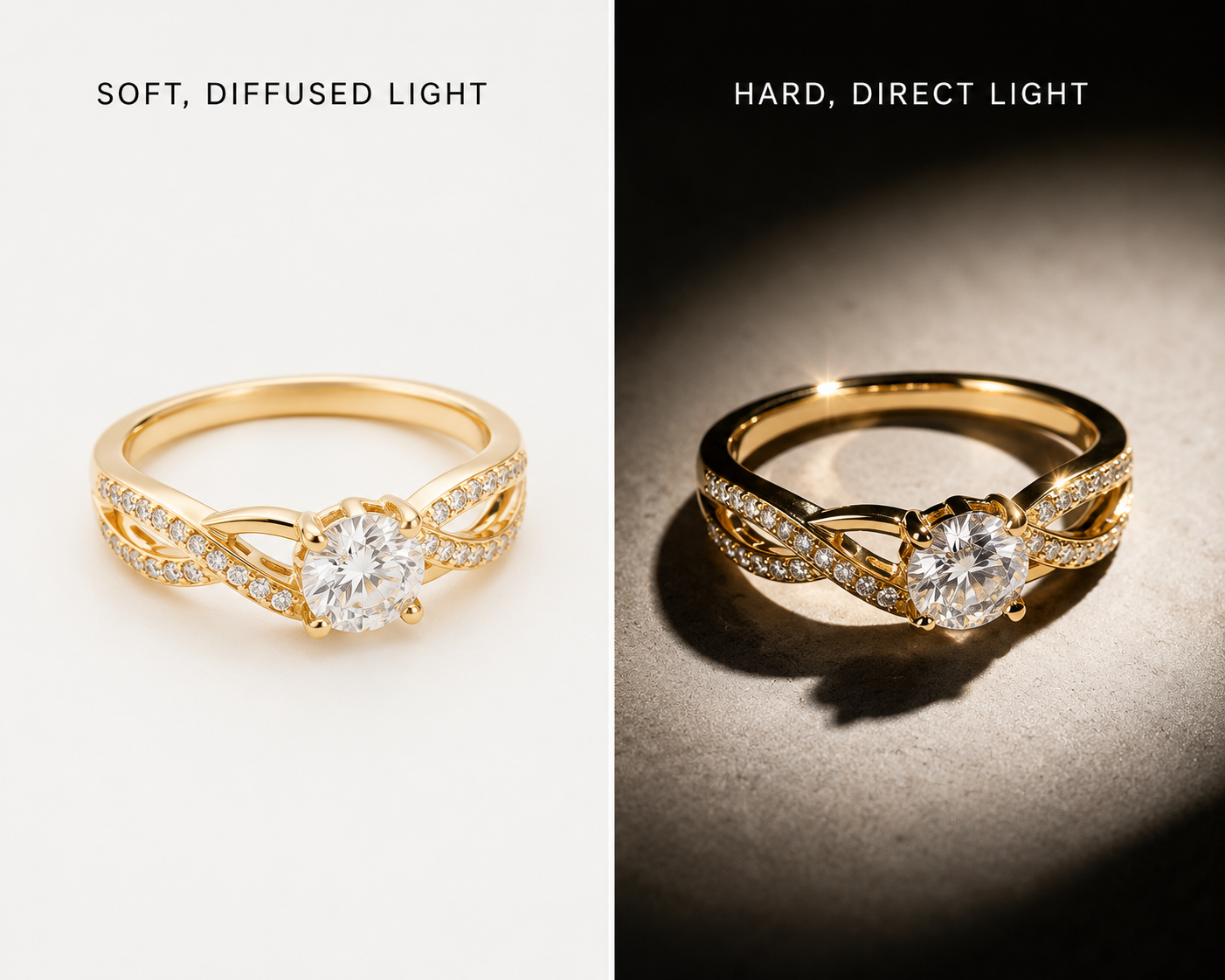
1. Soft Light: The Elegant Standard
Soft light is created when a light source is heavily diffused or bounced, effectively wrapping around the subject. In the studio, this is achieved using light tents, large softboxes, or diffusion panels.
The Mood:
Romantic, clean, approachable, and luxurious. Soft light feels like a cloudy day—even, calm, and highly flattering.
When to Use It:
- Highly Polished Metals: Soft light is the absolute best choice for photographing smooth gold, silver, and platinum. The large light source creates broad, smooth, and buttery reflections across the metal, preventing harsh, distracting glare.
- Pearls and Opals: These delicate, semi-opaque stones look their best under soft light, which highlights their smooth surface and subtle iridescence without blowing out the highlights.
- Standard E-Commerce: If you need clean, distraction-free product catalog shots on a white background, soft light is the industry standard.
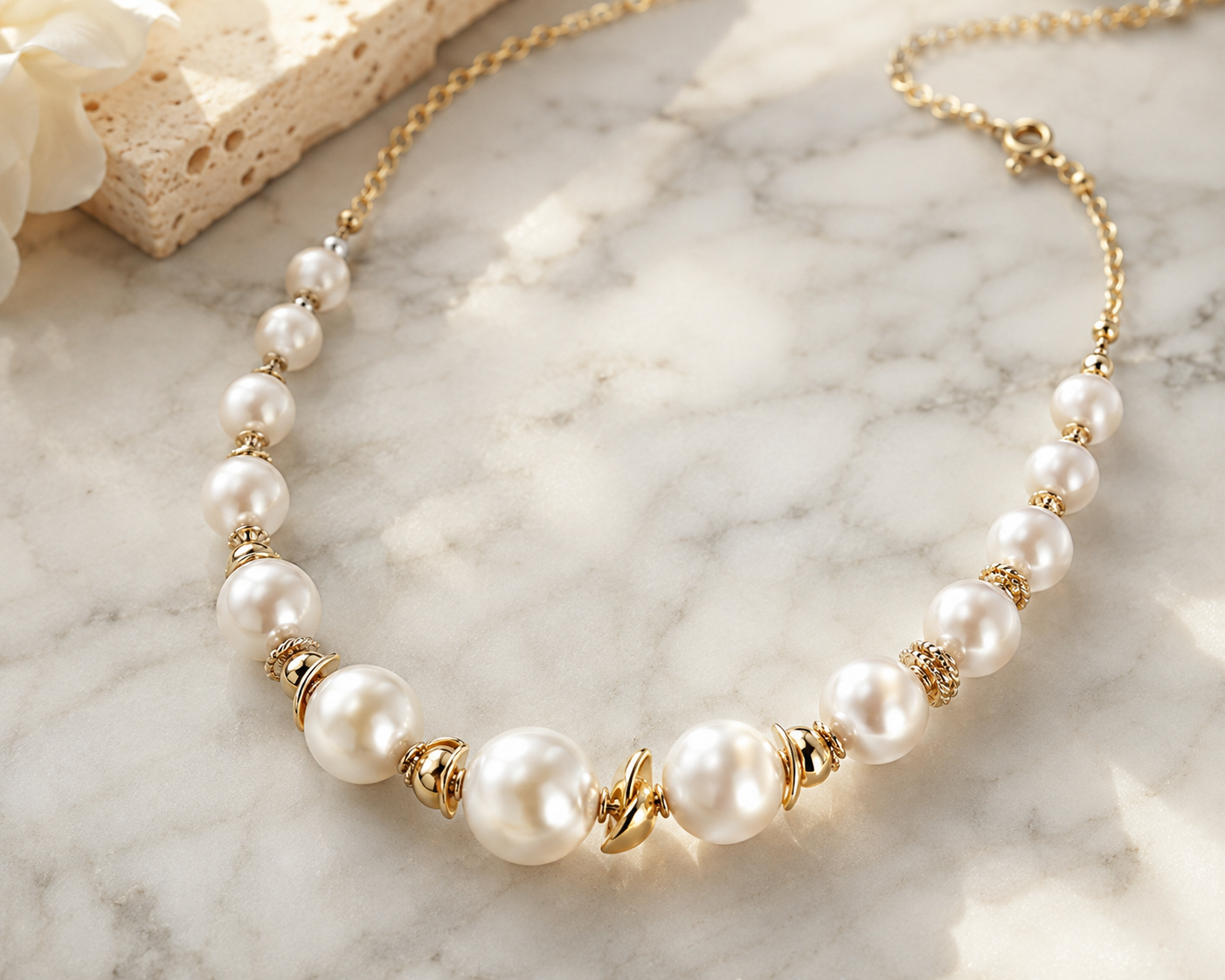
2. Hard Light: The Dramatic Sparkle
Hard light comes from a small, direct, and undiffused light source. Think of a bare LED bulb, a direct camera flash, or the midday sun. It travels in a straight line, creating high contrast and razor-sharp shadows.
The Mood:
Edgy, dramatic, bold, and high-fashion. Hard light demands attention and feels highly editorial.
When to Use It:
- Faceted Gemstones & Diamonds: This is the golden rule of jewelry photography—diamonds need hard light to sparkle. The direct, pinpoint rays of light enter the stone, bounce off the facets, and exit as brilliant flashes of "fire" (rainbow light) and scintillation (sparkle).
- Creating Texture: If you are shooting a piece with rough, hammered gold or intricate 3D details, hard light acting as a side-light will cast micro-shadows that beautifully emphasize the texture.
- Editorial Campaigns: Hard light is currently a massive trend in lifestyle and social media photography, casting bold, artistic shadows that stop the scroll.
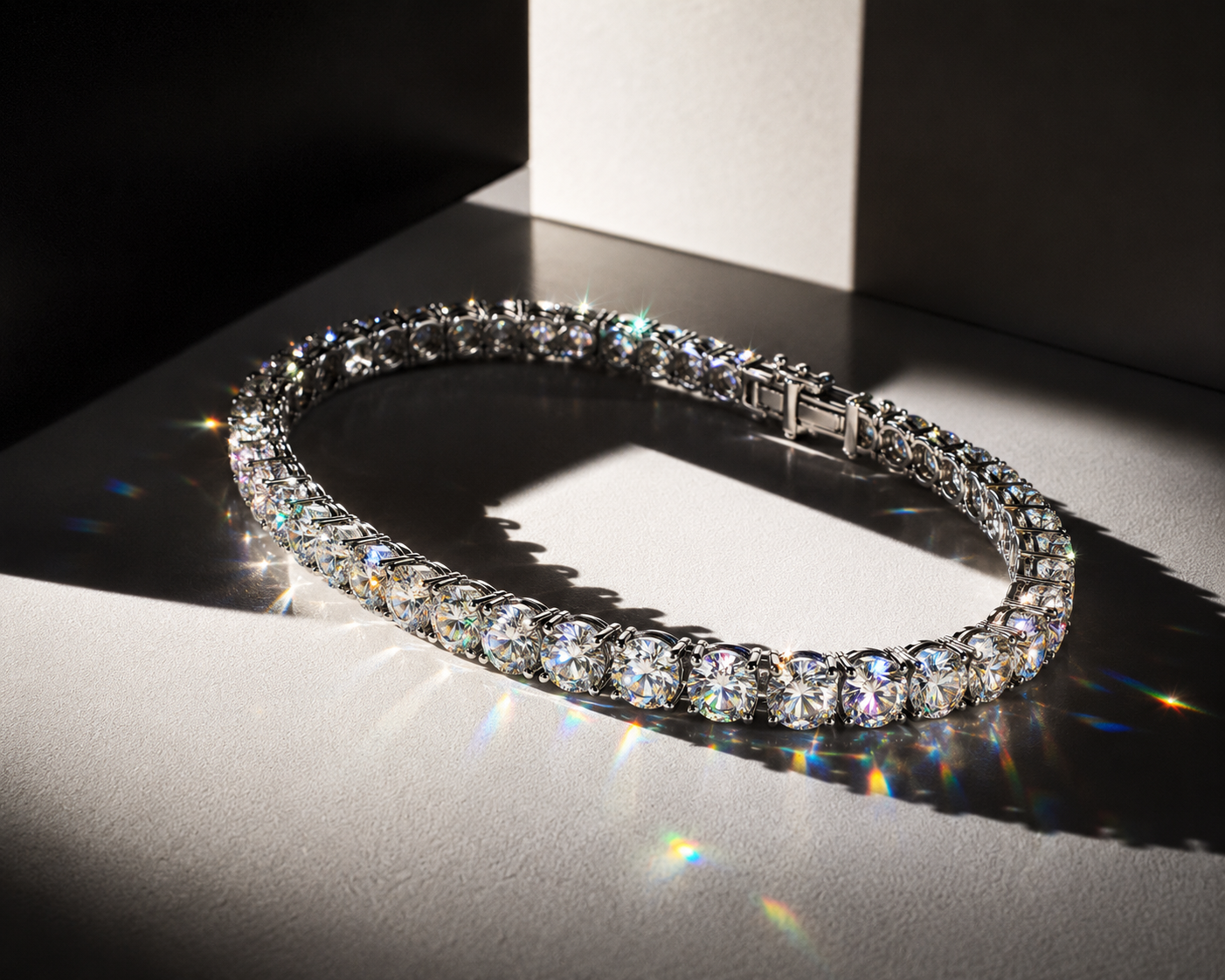
3. The Professional Secret: Mixing Both
What if you have a highly polished gold ring featuring a massive diamond? Soft light makes the gold look amazing but the diamond look glassy and dull. Hard light makes the diamond explode with fire but covers the gold in ugly, blown-out hotspots.
The solution is to mix them. Professionals use soft, diffused lighting (like a light cone or softboxes) as their base light to make the metal look flawless. Then, they introduce a tiny, highly directed hard light (like a fiber-optic snoot or small LED spotlight) pointed only at the diamond to activate the sparkle.
Final Thoughts
Choosing between hard and soft light is not about right or wrong; it is about intention. By mastering soft diffusion for your metals and hard, direct light for your gemstones, you can dictate the exact mood of your campaign and present your jewelry in its absolute best light.
Master Perfect Lighting Instantly with AI.
Struggling to balance softboxes for smooth metals while using spotlights for diamond sparkle? Grafx is an AI photography platform built specifically for jewelry brands. Generate hyper-realistic jewelry imagery with flawless hard and soft lighting setups in seconds.